Dinner from One Pot: Rice, Greens, and Eggs
Rice, greens and eggs can share a saucepan, but timing matters. Learn how to keep the grains tender, choose the right moment for each green and cook the eggs to a clear, food-safe finish.
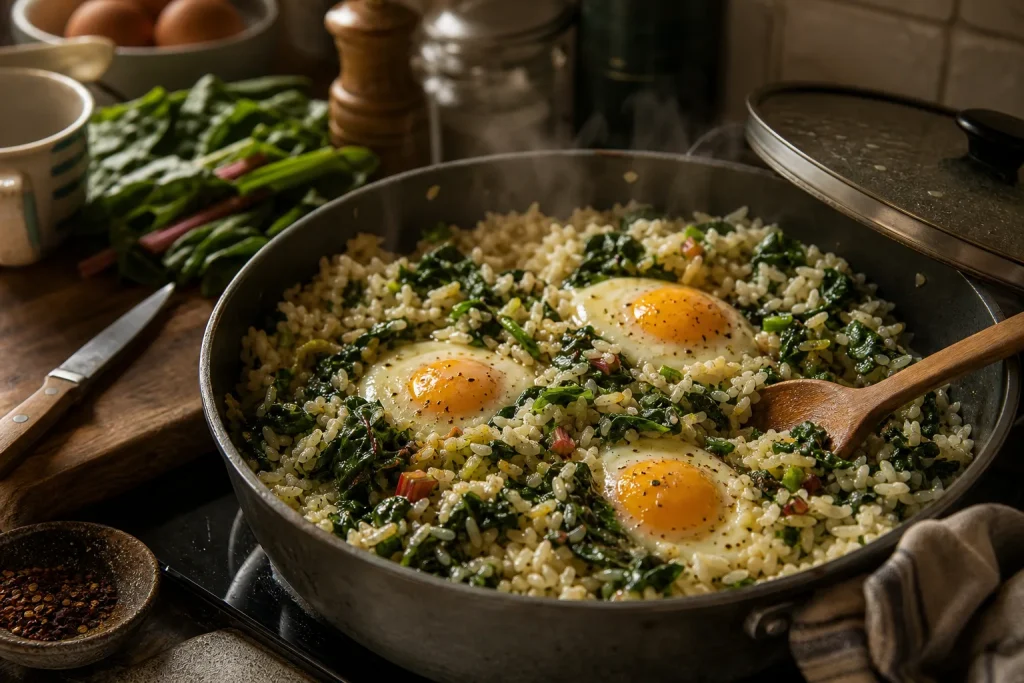
A pot of rice can become dinner with greens and eggs, but the sequence matters: cook the rice first, add greens according to how long they need, then finish with eggs. In a small kitchen, that keeps the meal in one saucepan and leaves less to juggle while the rice cooks.
Why is the rice still firm when the greens are ready?
Greens may have gone in too early for the rice’s cooking time, or the pot may have lost steam while you were adding them. Tender leaves can collapse while the grains remain firm, leaving an uneven mix of textures.
Bring the rice and cooking liquid to a simmer, cover the pot and cook according to the rice packet’s directions. Keep the lid on as much as possible. If the grains are still hard when the packet’s suggested cooking time has passed, check that the pot has not boiled dry; add a small splash of hot water if needed, cover again and continue until the rice is tender.
For greens that need longer, such as chopped kale or finely sliced chard stems, add the stems while the rice is nearly tender. Stir them in, cover the pot and let them soften before adding the leaves. This gives the sturdier parts a head start without leaving delicate leaves to overcook.
Why has the bottom caught before the rice is cooked?
A burner set too high can boil away liquid at the base before the grains soften. A thin saucepan can make heating less even, particularly on a compact hob.
Once the liquid reaches a simmer, turn the heat down to the lowest setting that keeps it gently bubbling, and cover the pot. Use a saucepan with a close-fitting lid and a flat base. If you smell scorching, do not scrape the bottom into the meal: transfer the unburnt rice to a clean bowl or pan, leaving the stuck layer behind, then add a little hot liquid if the rice needs more cooking.
If the rice is cooked but wet, remove the lid and let excess steam escape over low heat, watching closely. If it is dry and still firm, add hot water in small splashes, cover and continue cooking. Small adjustments are easier to judge than a large addition of liquid.
Which greens should go in first?
Use texture, not colour, to decide. Tough stems and dense leaves need more cooking than tender leaves. Wash the greens, shake off excess water and cut them into pieces that fit comfortably on a spoon. A small chopping board and a sharp knife are enough.
- Spinach: Check whether the rice is tender; if it is, fold the spinach through and cover until the leaves have wilted. If the rice is still firm, wait and cook it covered first.
- Chard: Check whether the stems are thick; if they are, slice them finely and add them while the rice is nearly tender, then add the leaves later. If the stems are already tender and thin, add them with the leaves near the end.
- Kale: Check whether the stems are tough; if so, remove them, slice the leaves finely and cook the leaves before adding eggs. If the stems are tender, chop them finely and add them with the leaves.
- Frozen peas: Check whether the rice is nearly tender; if it is, stir in the peas near the end. If they release liquid, leave the lid ajar briefly and watch the rice; if it remains wet, keep the lid off over low heat until excess steam escapes.
- Frozen chopped greens: Check whether they are frozen in a solid clump; if so, break the clump apart before adding it near the end. If the pieces are already separate, stir them in directly, then keep the lid ajar if they release excess liquid.
- Any leafy green: Check a piece for tenderness before adding eggs; if it is still too firm, cover the pot and cook it a little longer. If it is tender, proceed to the eggs without further stirring.
These are starting points rather than fixed timings: leaf size, amount and heat all affect how quickly greens soften. Check the rice and greens before adding eggs, because stirring becomes harder once the eggs are in.
How can the eggs cook through without disappearing into the rice?
Eggs can vanish into the grains if they are beaten in or dropped into a vigorously bubbling pot. For distinct eggs, lower the heat and make shallow wells in the rice and greens with the back of a spoon. Crack an egg into each well, taking care not to break the yolk, then cover the pot.
Because the eggs sit in a covered pot rather than being checked with a thermometer, appearance alone is not a reliable way to confirm that they are safe to eat. For a dependable safety check, use a clean food thermometer in the thickest part of each egg and follow current guidance from the Food Standards Agency for safe cooking temperatures. If you cannot confirm that the egg has reached the recommended temperature, continue cooking and check again, or cook the egg separately until it reaches that guidance. People at higher risk from food-borne illness should follow the Food Standards Agency’s advice on eggs and vulnerable groups.
If you prefer the egg mixed through, beat it in a cup and drizzle it into the hot rice while stirring. That gives a cohesive scrambled finish rather than intact eggs. Choose the method before cracking the eggs so the final stage stays calm.
What if the rice and greens finish at different times?
Pause before adding the eggs. If the rice is ready but the greens need more cooking, cover the pot and give them time; add a little hot water if the mixture is dry. If the greens are tender while the rice is still firm, lift them out with a fork or tongs, finish the rice covered, then return the greens before making the wells.
Say you have a small saucepan of rice that is nearly tender and a handful of spinach. Stir in some of the spinach and cover briefly, then add the rest before the eggs. The first leaves soften into the rice while the later leaves remain more distinct, giving the finished pot a mix of textures.
How can the pot stay manageable in a small kitchen?
Measure the rice and liquid before you start, and put washed greens and eggs within reach. A mug can serve as a measuring vessel if you follow the rice-to-liquid ratio on the packet; a chopping board can hold the prepared greens without taking over the counter.
Keep the pot covered during the rice stage, and use a wooden spoon when the sequence calls for stirring. Finish with salt, pepper or a pantry seasoning such as chilli flakes or soy sauce, tasting before adding more. Before serving, check that the rice is tender and not scorched, and confirm the eggs’ safe cooking temperature with a clean food thermometer and current Food Standards Agency guidance.