When a Small Lidded Skillet Can Replace Another Pan
A small lidded skillet can move from browning to a covered simmer, but it cannot do every job of a frying pan, saucepan or steamer. Its shape, capacity and lid determine where it earns its space.
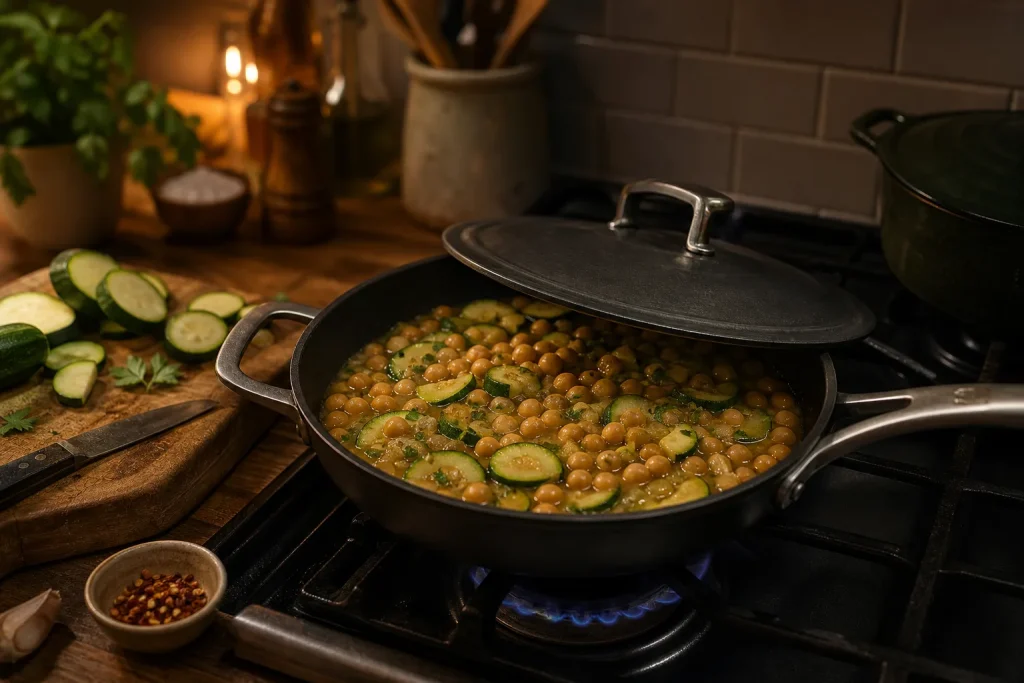
A small lidded skillet can take onions from softened to simmering chickpeas without shifting dinner to another pan. It can also be the wrong tool for a crisp sear, a deep pot of soup or a tall stack of vegetables; its broad base, modest depth and lid each have limits.
Think of it as a useful overlap, not a replacement for three pans in every kitchen. The right question is whether the meals you cook often suit its shape—and whether your other cookware already handles the jobs it cannot.
What does its shape do well?
The broad base gives ingredients room to sit against the heated surface, while the sides contain food as you stir. That suits softening onions, browning mushrooms in an uncrowded layer or searing a piece of fish. A close-fitting lid can then hold steam for a covered finish.
Those features work best when the quantity is modest. If ingredients overlap heavily, they may release moisture and soften rather than brown. A shallow pan can also splash as you stir, and a low lid may press against bulky food.
When can it replace a frying pan?
For a small sauté, scrambled eggs, tofu or vegetables, a lidded skillet may do the work of a frying pan while making stirring less messy. Its sides are helpful when you move ingredients around, especially on a crowded hob.
For crisp edges, a delicate fillet or several items that need room between them, an open, wider frying pan is often easier to use. Higher sides can obstruct a thin spatula, and covering the pan traps steam rather than preserving a crisp surface. A lid is useful when you want to finish cooking gently, not when you want food to stay dry and crisp.
When is a saucepan the better choice?
A skillet can manage a shallow sauce, a modest portion of grains that does not require much water, or vegetables simmered in stock. Browning ingredients before adding liquid is convenient because both stages can happen in the same pan.
A saucepan is better for boiling pasta, making a generous quantity of soup or stirring liquid vigorously without splashing. The skillet’s broad surface also exposes more liquid, so a long simmer may need closer attention. Choose the skillet when browning leads into a brief, shallow simmer; choose the deeper pan when volume and containment matter more.
Can its lid make it a steamer?
A lidded skillet can steam a modest portion of food if the recipe and the pan’s depth allow it. A purpose-made rack or steamer insert designed to fit the pan is more dependable than an improvised support: it should sit securely, leave room beneath the lid and keep the food at the height the recipe requires.
Do not balance a plate or rack in the pan if it wobbles, blocks the lid from closing or leaves too little room for steam. If you cannot confirm that an insert is stable and heat-safe for your pan, use equipment designed for steaming instead. Cooking greens directly in a little stock is a different method: they sit in the liquid rather than being kept above it.
Which pan fits the dinner you make?
- Check the cooking surface: If your usual portions fit in a single uncrowded layer, use the skillet for browning; if they overlap, cook in batches or choose a wider frying pan.
- Check the liquid depth: If the dish needs only a shallow amount of sauce or stock, the skillet may suit it; if it needs deep liquid or vigorous stirring, choose a saucepan.
- Check the lid clearance: If the lid closes without touching the food, a covered finish is possible; if it presses on ingredients or will not sit properly, cook uncovered or use a deeper pan.
- Check whether crispness matters: If you want a dry, crisp surface, leave the skillet uncovered or use an open frying pan; if gentle covered cooking is the aim, use the lid.
- Check the steaming setup: If a purpose-made insert sits securely and leaves headroom, use it for a modest portion; if it wobbles or crowds the lid, use a steamer designed for the job.
- Check how you need to lift the pan: If its handle remains comfortable and clear of nearby cupboards, it may suit your storage and hob; if it is awkward to move or obstructs the space, choose a different shape or handle arrangement.
Imagine you have one burner free and want to cook a courgette, a tin of chickpeas and a little stock. The starting ingredients are a sliced courgette, drained chickpeas and enough stock to make a shallow pool; the aim is a tender, saucy dish rather than crisp vegetables. Soften the courgette in the skillet, stir in the chickpeas and stock, then cover until the courgette is tender and the chickpeas are hot. The observable result should be a cohesive one-pan meal. If the courgette fills the base in a deep pile or the stock reaches close to the rim, the trade-off changes: cook the vegetables in batches or move the simmer to a saucepan to leave room for stirring.
What should you check before buying?
Start with the meals you actually cook and the space around your hob. Check that the base sits steadily on the cooking surface, that the sides contain the liquid you use, and that the pan feels manageable to lift. A long handle also needs clearance from walls and nearby cupboards.
Check the lid and handle together. If you expect to move the pan into the oven, confirm that both are suitable for that use; if either is not, keep the cooking on the hob or choose a pan with compatible parts. A helper handle can make a full pan easier to move, but it also needs room.
The skillet earns its place when its broad base, useful sides and lid suit the same meal. Treat it as a compact option for browning followed by a modest covered cook, and keep a frying pan, saucepan or steamer for the jobs its shape cannot do comfortably.