Chop Once, Use Twice: A Short Prep Window
A compact washing-and-chopping routine can prepare hardy vegetables for two different dinners without cooking either meal ahead.
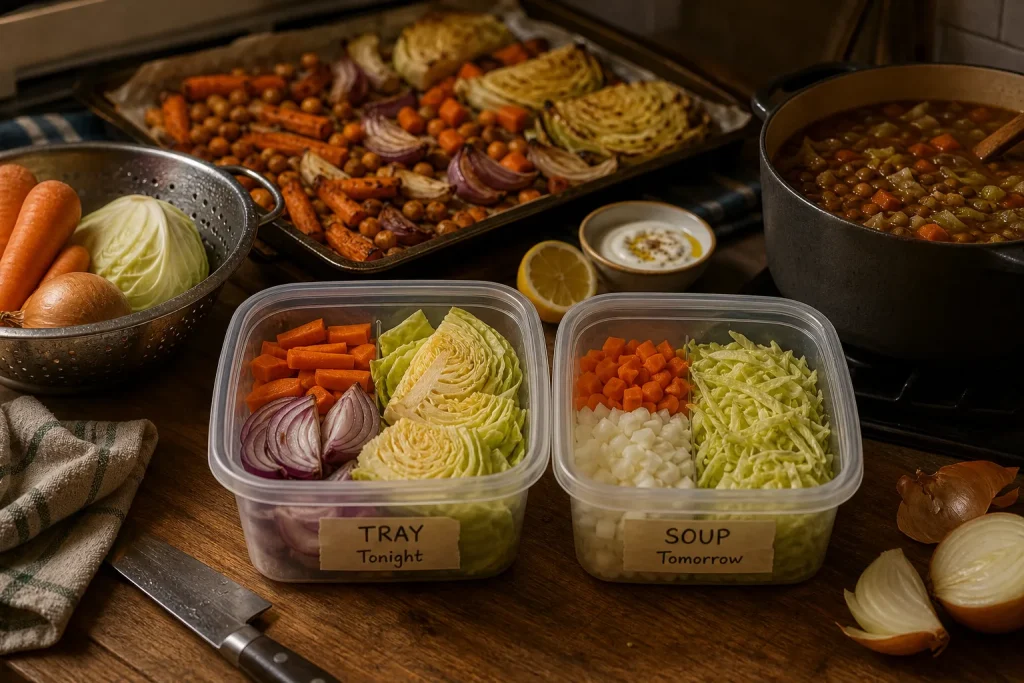
Wash and cut sturdy vegetables shortly before you plan to cook them, then keep them covered in the fridge until that meal. In a small kitchen, this works best when each cut has a clear destination, rather than becoming a general-purpose container of chopped odds and ends.
Imagine you have a free stretch before the evening gets busy, one chopping board and a narrow fridge shelf. You plan a tray of roast vegetables for one night and a quick lentil soup for another; only the washing, cutting and storage happen in advance.
What makes these meals work together?
The useful starting point is a shared set of ingredients that can take different routes. For this invented situation, choose carrots, a firm cabbage and an onion. The plan is to prepare them on the day of the first meal, refrigerate them promptly and use the portions that evening and the following day.
For the first meal, roast carrot and onion with a tin of chickpeas and a little oil. Cut the cabbage into wedges and roast it alongside them, serving yoghurt and lemon at the table. For the second meal, use diced carrot and onion as the base of a lentil soup, then add shredded cabbage near the end.
The distinction matters. A container labelled only “vegetables” invites indecision and can leave you with cuts that suit neither dish. Naming each cut’s destination makes the preparation easier to use while allowing the meals to remain distinct.
How can you keep the prep compact?
Clear the board and set out a colander, a clean tea towel, a sharp knife, a peeler if you use one, two lidded containers and a scrap bowl. This modest arrangement reduces shuffling tools around a crowded counter.
Wash the carrots under running water and scrub away soil. Peel them only if their skins are damaged or you prefer them peeled; otherwise, trim the ends. Peel the onion and remove any loose outer cabbage leaves. Rinse the cabbage where needed, then let everything drain and pat it dry with the tea towel.
Drying helps prevent water from collecting in the container. If a clean, cut vegetable remains visibly wet, pat it dry before packing; do not rely on kitchen paper to correct careless storage.
Make the cuts for their intended uses: thick carrot pieces for roasting and small dice for soup; onion wedges for the tray and diced onion for the saucepan; cabbage wedges for roasting and thin shreds for soup. If the cabbage is larger than the plan needs, leave a sound portion uncut.
How should you store each cut?
Use separate, covered containers for the two meals. Put the roast-ready carrot pieces, onion wedges and cabbage wedges together if they fit without being crushed. Place the soup dice and shredded cabbage in another container; store chopped onion separately if you want to limit its smell spreading.
Refrigerate the containers promptly and keep them cold. Use the cut vegetables for the planned meals that day and the following day; do not treat that as a universal safe-storage limit. Guidance can differ by produce and handling, so check current advice from the UK Food Standards Agency or NHS if you need to store them longer or are unsure. Discard anything that looks or smells spoiled rather than trying to make it usable by cooking.
A strip of masking tape or a reusable label can say “tray” and “soup”, with the intended order. In a compact fridge, a plainly labelled container is easier to retrieve than a mystery box tucked behind a jar.
What happens on the first dinner night?
Take out the container marked “tray”. Tip the vegetables on to a baking tray, add drained chickpeas, oil, salt and any seasoning you like, then roast until the vegetables are tender and browned to your preference. The advance work ends where the cooking begins.
Say you plan the tray meal for an evening when you have little counter space and limited patience for peeling. You open the labelled container, add chickpeas and seasoning, and put the tray in the oven. The expected result is less chopping at dinner time, though you still need to heat the oven, check the vegetables and wash the equipment afterwards.
Keep the cabbage wedge separate from smaller pieces if you want to control how it cooks. Its shape makes it easier to notice if it needs a different position on the tray or more time than diced carrot.
How does the same prep become a different meal?
On the next planned night, take out the soup container. Soften the diced onion and carrot in a saucepan with a little oil, add lentils and stock or water, then simmer until the lentils are cooked. Add the shredded cabbage towards the end so it softens without disappearing into the broth.
The vegetables now have different roles: carrot and onion form the base, while cabbage is a late addition. Adjust the liquid and seasoning to suit the cupboard; a tin of tomatoes can add a sharper flavour if that suits the soup.
Imagine you want one saucepan and no extra chopping that evening. You take the soup container from the fridge, soften the onion and carrot, and reach for lentils and stock while they cook. The expected result is a soup with ingredients cut for different cooking times, without clearing the counter for fresh preparation.
Keep the meals flexible rather than treating the containers as exact recipes. If the roast plan changes, use those vegetables in a pan with beans or grains. If the soup plan changes, the diced vegetables can still start a sauce or another simple dish.
Which decisions make this routine easier to use?
- Check the vegetables before cutting: if they are sound and free of signs of spoilage, prepare the planned portions; if they are slimy or badly bruised, discard the affected produce and choose another ingredient.
- Check the meal plan: if both meals have a clear use for the carrots, cabbage and onion, make the corresponding cuts; if one meal is uncertain, prepare only the portion with a definite destination.
- Check the cabbage size: if the whole cabbage suits the two meals, divide it into wedges and shreds; if there is more than the plan needs, leave the extra portion uncut.
- Check the cut surfaces before packing: if the vegetables are drained and dry to the touch, place them in covered containers; if they are wet, pat them dry first.
- Check the storage timing: if you will use the vegetables that day or the following day, refrigerate them promptly in labelled containers; if your plan extends beyond that, consult current food-safety guidance and adapt the plan rather than assuming the same timeframe applies.
- Check whether the onion smell matters: if it could affect the other vegetables or nearby foods, put the onion in a separate covered container; if not, store it with the ingredients for its meal.
- Check the cooking shapes: if the tray contains both small pieces and cabbage wedges, keep the wedges apart so you can judge their readiness; if you want everything to cook together at a similar pace, cut the vegetables into more even-sized pieces.
Leave seasoning and cooking decisions for the meal itself. Oil, lemon, herbs and spices can be adjusted to the dish and what is available that evening, while plain vegetables keep a change of plan manageable.
Treat the prep as a small reset, not a separate cooking session: wash, dry, cut, divide, label and clean the board. The result is not two finished dinners in the fridge, but two clearer starts—and a useful reminder to keep advance preparation close to the meal it is meant to serve.