A Tin of Tomatoes Beyond Pasta Night
One tin of tomatoes can lead to a spiced chickpea stew, a quick fish braise or a savoury bean bake. Let the pantry decide which direction dinner takes.
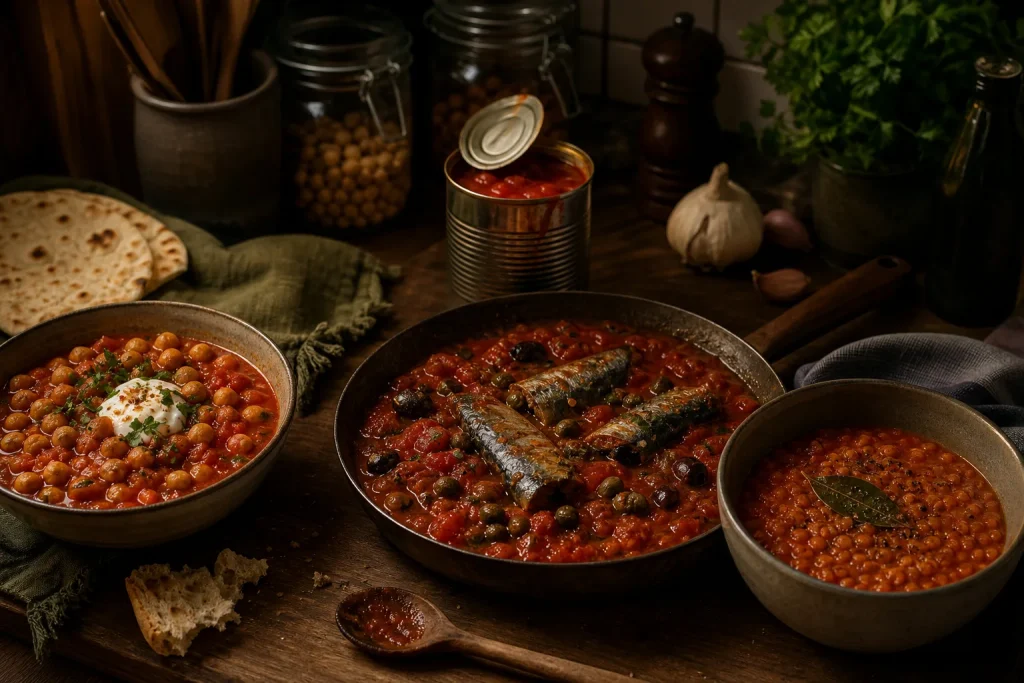
A tin of tomatoes can take dinner in three different directions without asking for a large chopping board or a crowded hob. The useful question is not what recipe you planned, but which pantry companions are already within reach: beans, a tin of fish, lentils, stock, spices or a heel of bread.
For a modest kitchen, choose one route and keep the rest of the meal simple. A small saucepan or deep frying pan, a wooden spoon and a can opener are enough for all three ideas below; each makes a different sort of dinner from the same tomato base.
1. Do you have beans and a warm spice?
Turn the tomatoes into a chickpea or butter bean stew. Soften a chopped onion in a little oil if you have one; if not, start with garlic, ground cumin and smoked paprika in the pan, stirring briefly so the spices release their aroma without catching.
Add the drained beans and tomatoes, then rinse the tomato tin with a splash of water and pour that in too. Simmer until the sauce thickens slightly and the beans taste seasoned through. A pinch of chilli flakes brings heat; a spoonful of yoghurt, if available, softens it at the table.
This direction suits a pantry with legumes and spices because the beans supply substance while the spices give the tomatoes a clear character. Serve it with flatbread, toast or couscous. If the cupboard offers no grain and the fridge has no bread, keep the sauce thicker and eat it from a bowl.
Say you have chickpeas, cumin and a small bag of couscous but no fresh vegetables. You could simmer the chickpeas with tomatoes and cumin, then cover the couscous with hot water in a mug while the sauce cooks; the expected result is a warm, filling bowl with only one pan to wash.
2. Is there tinned fish and something sharp?
For a briny, savoury dinner, make a tomato braise with sardines, mackerel or tuna. Warm a little oil with garlic or a pinch of chilli, add the tomatoes and let them bubble until they lose their raw edge. Stir in capers or olives if the cupboard has them; their saltiness gives the sauce definition.
Fold in drained tuna near the end so it stays in flakes, or lay sardines or mackerel gently over the sauce and warm them without breaking them up. Tinned fish is already cooked, so the aim is to heat it through, not simmer it for ages. Taste before adding salt, especially if you have used olives, capers or fish packed in brine.
This is a good choice when there is no fresh protein to hand and you want a sauce with more savoury depth than beans usually provide. Spoon it over toast, polenta or boiled potatoes. If the only accompaniment is crackers, keep the sauce concentrated enough to scoop rather than ladle.
With tuna but no olives or capers, a little vinegar or lemon juice can lift the sauce if either is available. Add it cautiously, taste, then adjust: tomatoes already bring acidity, and the fish should remain the main savoury note rather than disappear beneath a sharp dressing.
3. Do lentils and stock point towards a thicker bowl?
Use lentils to make a tomato stew that needs little else alongside it. Red lentils cook down quickly and give the sauce a soft, thick texture; green or brown lentils keep their shape better but may need to be cooked separately first, unless they are already cooked or tinned.
For red lentils, stir a handful into the tomatoes with water or stock, plus a bay leaf, curry powder or dried thyme according to what is in the cupboard. Keep the heat gentle and stir from time to time, adding more liquid if the lentils absorb the sauce before they soften. Remove the bay leaf before serving.
The reasoning here is practical: lentils make the tomato tin do double duty as both sauce and cooking liquid. Stock adds savoury depth, but water is perfectly workable; salt, dried herbs and a little oil can fill in the flavour. A spoonful of butter or a swirl of cream, if already on hand, makes the bowl rounder without requiring a separate side dish.
If you have cooked lentils left from another meal, add them near the end instead. This keeps the cooking short and prevents them turning mushy. Serve the stew with toast, rice from the freezer or nothing more than a spoon, depending on what the kitchen offers.
How do you choose between the three?
Start with the ingredient that needs using, then match it to the texture you want. Beans make a chunky stew; tinned fish gives a quicker, more savoury braise; lentils turn the tomatoes into a thicker bowl. The choice matters more than adding every possible extra.
Keep a small adjustment in reserve. If the sauce is thin, simmer it uncovered; if it becomes too concentrated, add water a little at a time. Salted pantry additions such as stock cubes, anchovies, olives and capers can build flavour quickly, so taste before reaching for the salt cellar.
For a compact kitchen, set out only the ingredients for the route you choose and use the empty tomato tin to collect peelings or measure water. A single pan can take the meal from the first stir to the table, while whatever remains can cool in a shallow container before refrigeration. That small pause makes it easier to put away safely and leaves the counter ready for breakfast.